
Discover Paradores
Article Sidebar

This work is licensed under a Creative Commons Attribution-NonCommercial-ShareAlike 4.0 International License.
Main Article Content
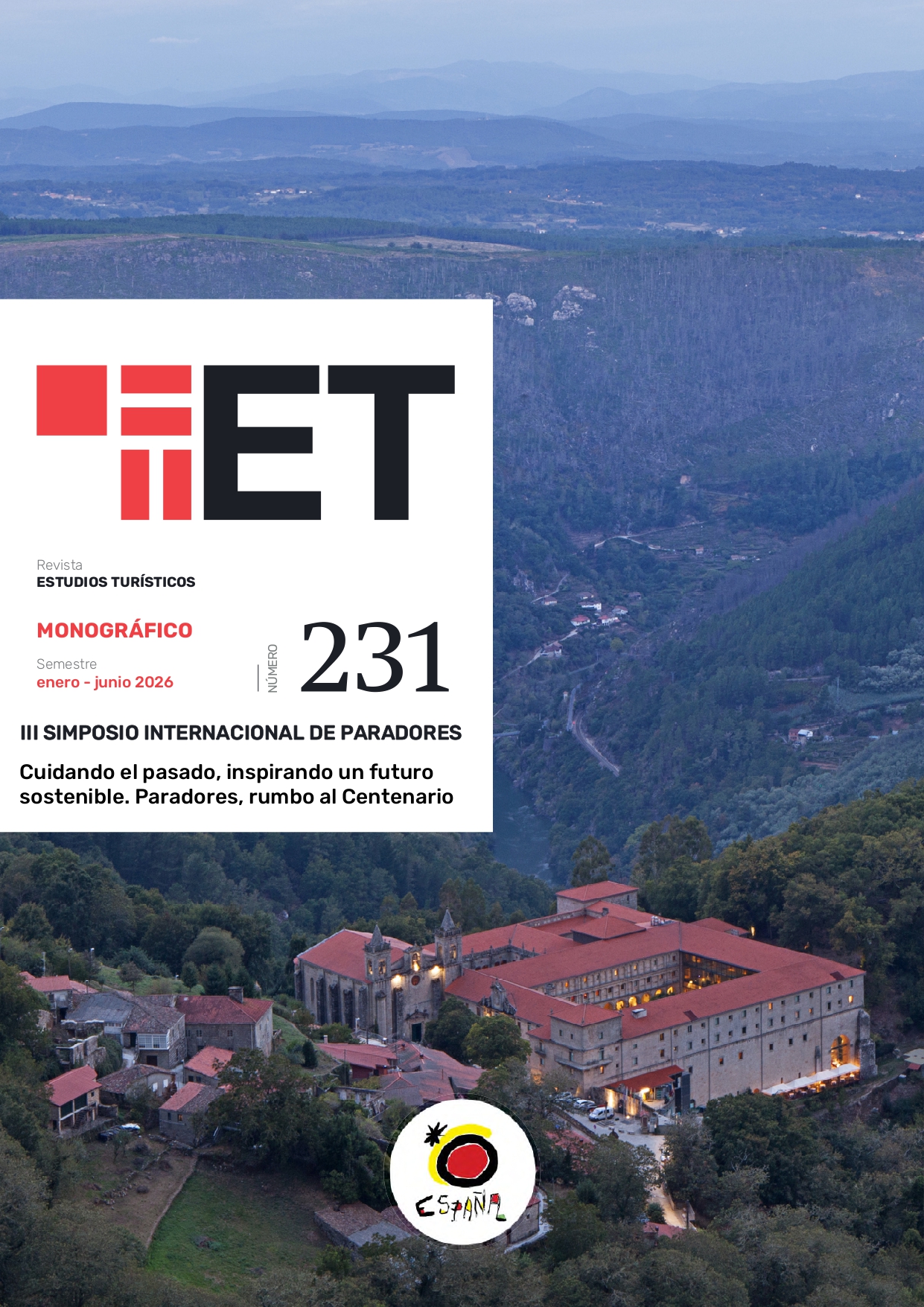
Discover Paradores is a new interactive cultural and tourism initiative designed that uses cutting-edge technologies to bring the heritage of the Spanish National Paradores Network to a broad audience. This first phase has been led by five partner institutions: Fundación Contemporánea, the General Foundation of the Polytechnic University of Madrid, GMV Soluciones Globales Internet S.A., the publishing house La Fábrica, and Paradores de Turismo de España S.M.E. S.A. The project forms part of the Ministry of Industry and Tourism’s ‘Spain Tourism Experiences’ programme, funded by the European Union through the NextGenerationEU mechanism within the Government of Spain’s Recovery, Transformation and Resilience Plan. Developed over the course of 2025, the initiative has completed a first phase across eight Paradores: Gredos, Oropesa, Úbeda, Mérida, Hondarribia, Chinchón, Lerma, and Santo Estevo. Following extensive multidisciplinary research, published as a collection of eight monographic volumes, the project has created virtual guided routes accessible on users’ mobile devices and introduced new interpretive displays in these eight Paradores.
Article Details
Bayón Mariné, F. (Dir.), Marco Valdueza, H., Vogeler Ruiz, C., González de Sousa, Mª. Á. (Coord.). (1999). 50 años del turismo español. Editorial Universitaria Ramón Areces.
Correyero Ruiz, B., & Cal Martínez, M. R. (2008). Turismo: La mayor propaganda de Estado. ESPAÑA Desde los orígenes hasta 1951. Editorial Vision Net
Cupeiro López, P. (Coord.). (2022). II Simposio Internacional “Paradores, turismo y territorio. Rumbo al Centenario”. Estudios Turísticos, 224. https://estudiosturisticos.tourspain.es/index.php/ET/issue/view/2
Cupeiro, P. (Coord.). (2019). I Simposio Internacional “Paradores, turismo y cultura. Rumbo al Centenario”. Estudios Turísticos, 217-218. https://estudiosturisticos.tourspain.es/index.php/ET/article/view/71
Cupeiro López, P. (2018). La creación de una imagen a través de la propaganda turistica: Patrimonio cultural y paradores. En B. Alonso Ruiz, J. Gómez Martínez, J. J. Polo Sánchez, L. Sazatornil Ruiz, F. Villaseñor Sebastián, (Coords.). La formación artística: creadores, historiadores, espectadores, Vol. 1 (870-883). Editorial Universidad de Cantabria.
Esteve Secall, R., & Fuentes García, R. (2000). Economía, historia e instituciones del turismo en España. Ediciones Pirámide.
Fernández Fúster, L. (1991). Historia General del Turismo de Masas. Alianza
Larrinaga Rodríguez, C. (Dir.). (2021). Luis Bolín y el turismo en España entre 1928 y 1952, Marcial Pons. DOI: https://doi.org/10.2307/j.ctv2zp4x99
Martínez-Roget, F., & Castro, B. (2025). State-Led Tourism Infrastructure and Rural Regeneration: The Case of the Costa da Morte Parador (Galicia, Spain). Land, 14(8), 1636. https://doi.org/10.3390/land14081636 DOI: https://doi.org/10.3390/land14081636
Miguel Arroyo, C., & Ríos Reviejo, M. T. (coord., 2014). Visite España. La memoria rescatada, Ministerio de Cultura.
Menéndez Robles, M. L. (2006). El Marqués de la Vega Inclán y los orígenes del turismo en España. Ministerio de Industria y Comercio.
Moreno Garrido, A. (2007). Historia del turismo en España en el siglo XX. Editorial Síntesis.
Ordieres Díaz, Mª. I. (1995). El Marqués de la Vega-Inclán: una nueva sensibilidad en el campo de la restauración. En Historia de la Restauración Monumental en España (1835-1935). Ministerio de Cultura.
Paradores de Turismo de España. (2019). Memoria de sostenibilidad, Red Nacional de Paradores. (p. 74.)
Pellejero Martínez, C. (2000). La intervención del Estado en el sector turístico: de la Comisión Nacional a la Empresa Nacional de Turismo. Junta de Andalucía.
Rodríguez Pérez, M.ª J. (2018). La red de Paradores: Arquitectura e Historia del turismo, 1911-1951. Turner.
Romero Samper, M. (2003). Paradores 1925-2003. 75 años de tradición y vanguardia. Paradores de turismo de España.
Vallejo Pousada, R. (2022). Historia del turismo en España 1928-1962: economía, política y administración turística. Silex.